GRAD Alumni Research Award 2014 Recipient: Carolyn Parkinson, PBS
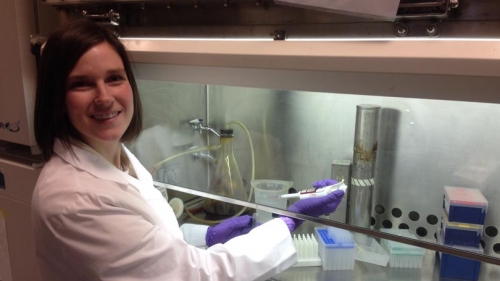
Carolyn Parkinson is a PhD candidate in Cognitive Neuroscience in the Wheatley lab in the Department of Psychological and Brain Sciences.
[more]Carolyn Parkinson is a PhD candidate in Cognitive Neuroscience in the Wheatley lab in the Department of Psychological and Brain Sciences.
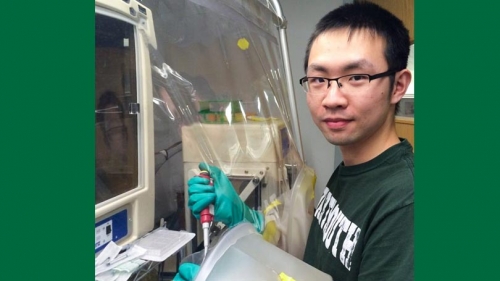
[more]Jilai Zhou is a PhD candidate at Thayer School of Engineering. As a substitute for liquid transport fuel, bioethanol has become a focus in industrial biotechnology. Unlike the first generation bioethanol derived from feedstock, cellulosic ethanol not only reduces the dependency of fossil fuel and the carbon dioxide emission, but also avoids the consumption of starch or sugars important for humans. An efficient way to convert cellulose to ethanol at low cost is via consolidated bioprocessing (CBP).
[more]Carotenoids are a diverse group of pigments that are readily produced by plants and algae but must be obtained by animals through dietary means. They are used by many taxonomic groups including lizards, birds, fish, mollusks, and insects for myriad functions including visual pigmentation, photoprotection, antioxidation, and signaling.
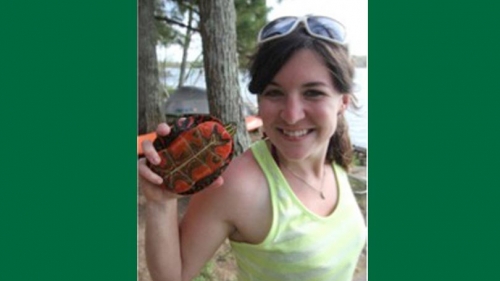
[more]In the Green Lab, Megan O’Connor studies the immune response to LP-BM5, a retrovirus which causes severe immunodeficiency in mice i.e. mouse AIDS (MAIDS). The LP-BM5 infection model is used to further understand the immune response against retroviral infection and also as a model system to study HIV infection. Mice infected with LP-BM5 have a weakened immune response and O’Connor’s project involves looking at what cell type(s) may be contributing to the immunosuppressive environment.
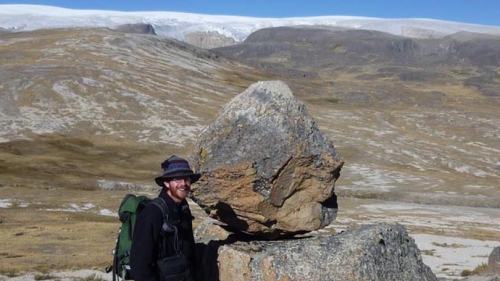
[more]Justin Stroup is a PhD candidate in the Department of Earth Sciences.
[more]